

Towards the end of last year I had a few questions about my latest rant against org charts. I mean, we all hate them - but it would appear that some think I’ve ‘turned it up to 11’ (RIP Rob Reiner).
They aren’t wrong - because I think the problem requires to be turned up to eleven. It’s louder.

Why Most People Think Org Charts Are No Good
They Don’t Match Reality
Everyone knows the real decision-maker often isn’t the one at the top of the box. Influence ≠ title.
They Hide the Humans
Org charts reduce people to job titles and reporting lines. No context, no relationships, no nuance.
They Ignore How Work Actually Gets Done
Most collaboration is cross-functional, informal, and messy. Org charts don’t show the messy bits - just the illusion of order.
They Leave Out the Important People
Contractors, freelancers, cross-border teams, AI tools, and shadow networks? All notably absent from the chart.
They Reinforce Bureaucracy, Not Agility
Org charts suggest you need to ‘go through the chain’ but we all know that efficiency is about people reaching out to those that they know can get it done.
They’re Static in a Dynamic World
Roles change, teams form and dissolve, priorities shift while the org chart remains frozen in time.
They Signal Status, Not Value
They’re often more about who reports to whom than about who creates real impact.
They Confuse Structure with Clarity
Just because you can draw it doesn’t mean you understand it. Org charts create a false sense of understanding.
They Can Be Weaponized
Who’s in, who’s out, who moved up, who got sidelined. Org charts can fuel internal politics and turf wars.
They Don’t Help You Navigate
If you’re new to an organization and trying to figure out “who to talk to,” the org chart is usually the last thing you turn to.
Org charts have become the wallpaper of corporate life. Ubiquitous, tidy, and comfortingly hierarchical. But they’re wrong - not just in how they look, but in what they imply.

Not only that - but they have become too complicated and detailed with the ever beating drum of The Fractalisation Of Work.
… and …
They are just wrong. Always.
That said - I do fit myself into every org chart out there … I assume the role held in the ‘blue’ box …
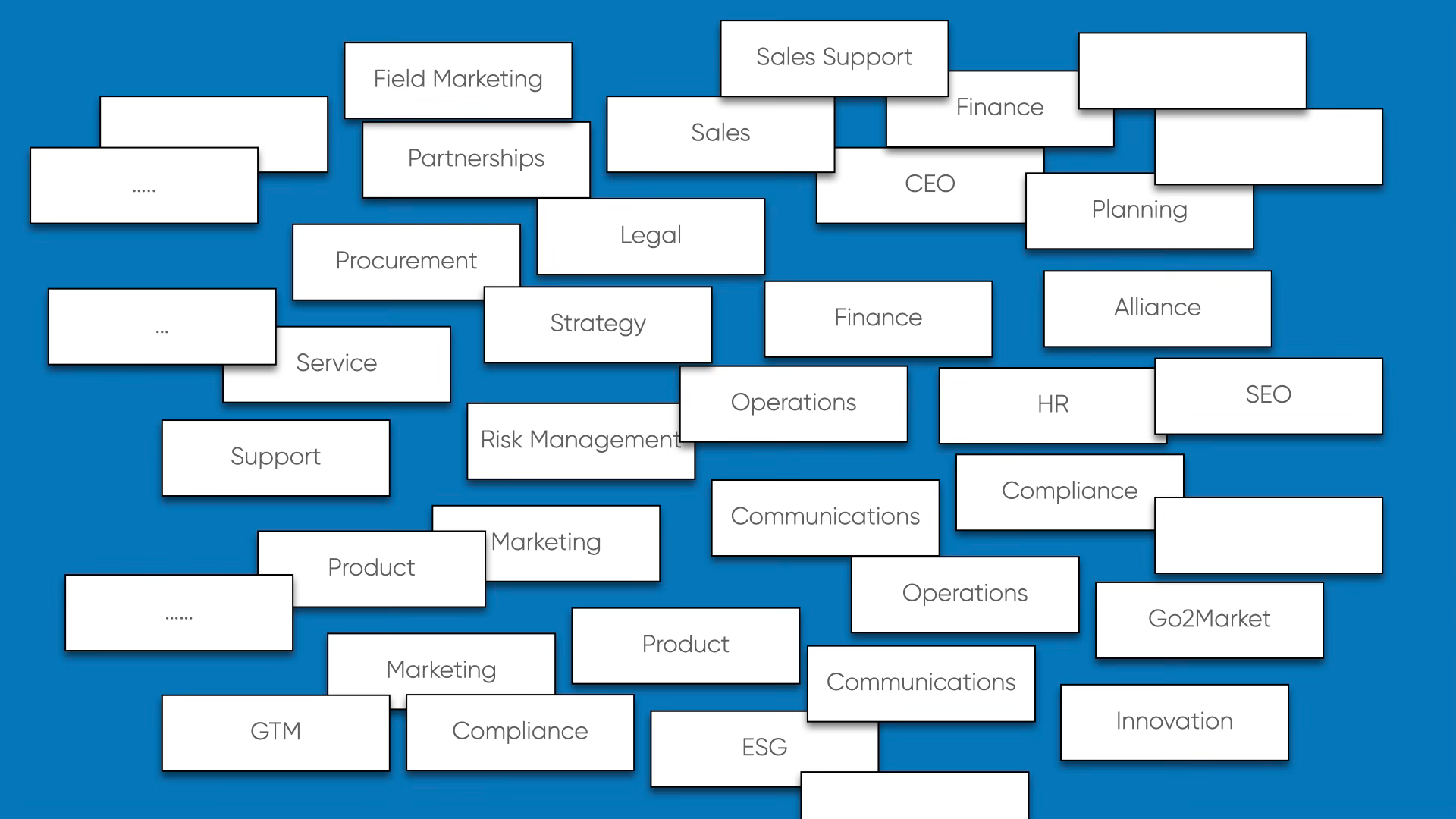
I can so this because work may have fractionalised - but I haven’t - and work happens at boundaries.
