
There’s a disclaimer you see everywhere in investment materials:
“Past performance is not an indication of future results.”
… It's a hedge (pun intended) against the assumption that ‘if it happened yesterday, it happens tomorrow’ because yesterday's consistency isn't tomorrow's guarantee.
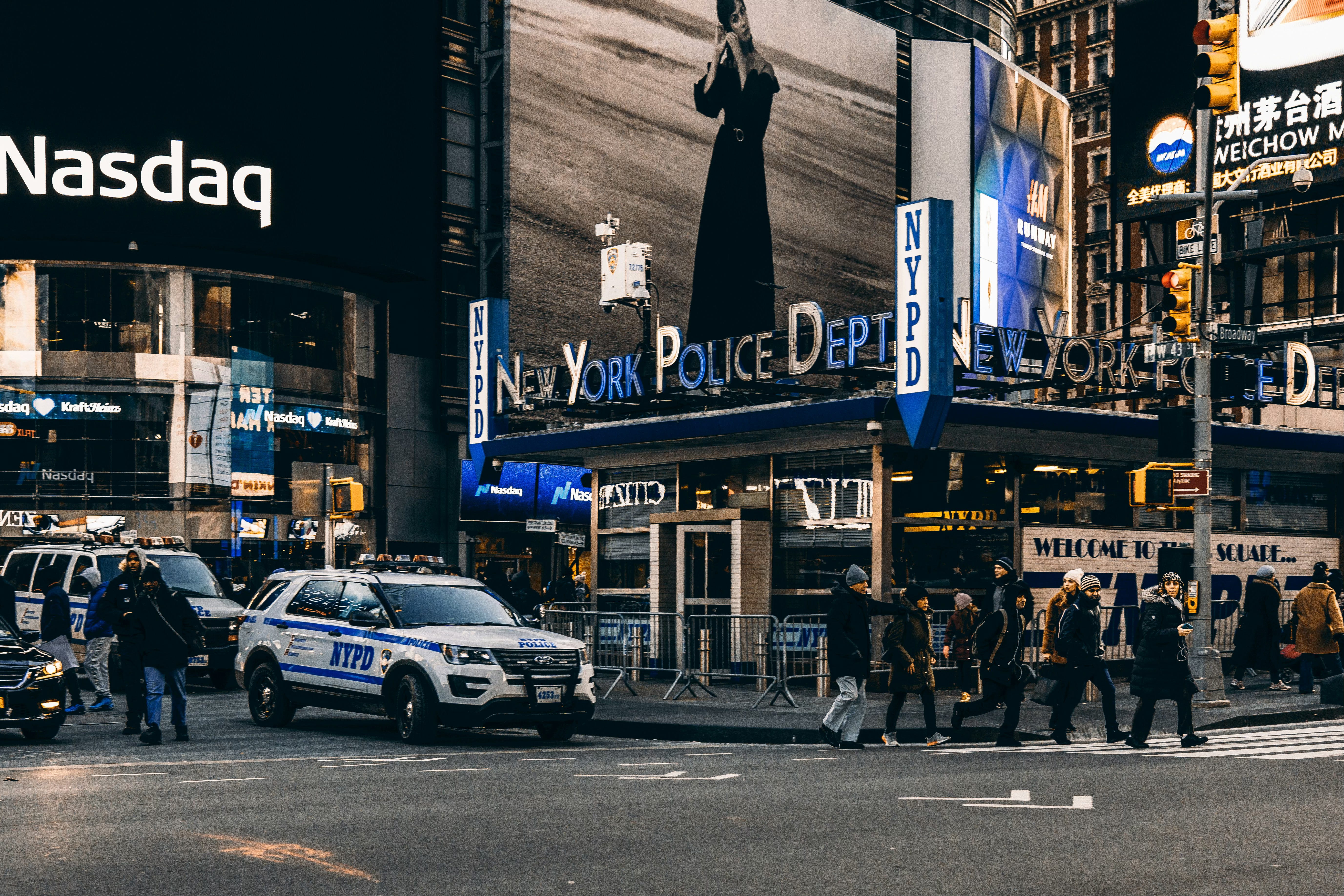
(SIDENOTE: Has NYPD always had a branch next door to The Nasdaq? Sure seems convenient - and possibly appropriate?)1
In tech we don’t have such a disclaimer. But we might well need one. Because as AI increasingly takes hold, the pundits and wizards behind the curtains are taking to referencing history as part of our ‘education process’.

The printing press in the 1440s freed information.
… they declare - and then go on to provide a brief history lesson (in case we missed school that day) …
.. information went from ‘scarce’ and ‘controlled’ to everywhere. The Catholic Church wasn’t happy. Wars were fought. But society restructured around it. Literacy exploded. New professions emerged. The world absorbed it.
… all while conveniently omitting the timescale.
The press was invented and 15 years later they printed the first Bible, taking another 50 years to spread across Europe (let alone ‘RoW’) and then a full 160 years passed before it finally fuelled the Reformation.
They would also be advised to have a read of Harari’s latest volume - Nexus, on this particular narrative - but let’s stay on this track for now.
During the Industrial Revolution around the 17th to 18th century (we are reminded that … ) people moved from farms to factories. Labour patterns were inverted. Social structures shattered and rebuilt. There was real societal upheaval. But wages eventually rose. Living standards eventually improved - and the world kept going.
History also tells us that the steam engine first appeared in 1712 with another 40 years passing before James Watt refined it for rotary power and another 50 years to get to the first steam locomotive.
Well - how about electricity? Can’t you just hear their breathlessness?
It ‘arrived’ in the late 19th century and transformed production, communication, daily life simultaneously. It changed when and where people worked, how they lived, what was possible. Massive disruption. Fundamental restructuring. But humans found new equilibrium - and the world was okay.
Again. ‘Timescale’ and ‘Scale’ … 40 years from Faraday’s dynamo to the first light bulb. The first power station served 60 customers. A full 70 years passed before the first 50 per cent of America was electrified.
Don’t you feel so much better when you realise through all this tumultuous change that the world …
absorbed it.
kept going.
was okay.
Makes you feel good. Right?
But there’s more. When you next tune in to the pundits rabbiting on about this ‘AI stuff’ .. and they say;
We’ve been through it all before. We’ll be fine. We’ll be resilient.
Keep that disclaimer ‘front and center’ …
.. because this time it is different.
This time it’s …
Faster – Previous disruptions took generations to fully absorb. This one is compressing years into months.
Affects everyone – The printing press needed readers. Factories needed workers. Electricity needed infrastructure. AI doesn’t require permission or literacy and it’s already everywhere.
Global – There’s no where to escape to. No place where the old rules still apply. No opt-out.
It learns from us. It will learn from itself. (Even though every time I read that my mind jumps to ‘Multiplicity’ with Michael Keaton - but that’s yet another different thread.) The printing press was static. A combine harvester does one thing. But this? It learns from what you feed it, then uses that to ‘improve’ itself, then learns from those improvements. The loop is closing, the tool gets ‘smarter’ (more convincing?) - all while you are re still figuring out how best to use it.
Nobody actually knows how it works. You can understand a printing press. You can understand a combine harvester. Even the people building those things grasped the mechanics. But AI? Even the engineers building it can’t fully explain why it makes the decisions it makes. You’re delegating thinking to something you don’t understand.
It’s adaptive. Every other technology was fundamentally the same yesterday as today. This one changes. Morphs. Responds. You can’t treat it as a fixed tool because it isn’t.
One More Thing
Previous disruptions changed what humans did.
This one changes how humans think .. and maybe what?
If you reached this far and want to talk more - I certainly do.
Let’s set up some time to explore how Structured Thought can be used to help your business transition into the ‘Age of Experience’. Let’s book some time.

Maybe it is a collage❓
AI is changing how people think, by creating in part a significant amount of not thinking critically. This paired with a real lack of reflection is very concerning indeed. Especially with people who have the attention span of.a reel or clip and who cannot take part in any semblance of a quality conversation.