
The same can be said for Systems of Record.
This is the first of a two part issue. If you already know our history and are more interested in where we are going - then the next newsletter is for you.

‘They’ have their CRM. Where’s my VRM?1
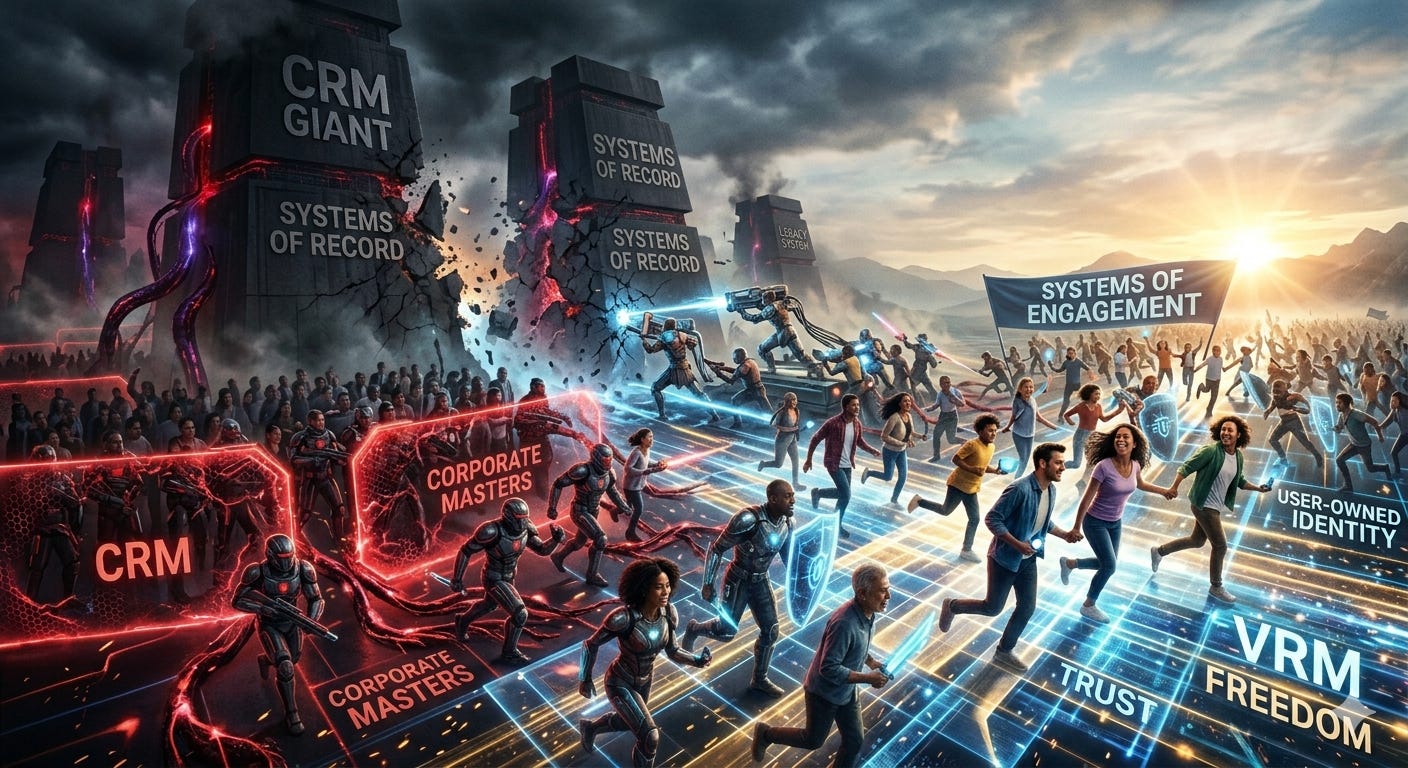
Before you get too excited - sorry this is not about that - but - the question has been my North Star for a couple of decades. It’s the itch that ‘Systems of Record’ couldn’t scratch, and the reason I spent my career working as a translator in rooms where the wrong problems were being solved with clinical precision.

The Translator in the Room.
My job was simple ..
Translate.
For technologists - competing to build smarter mousetraps and needing to explain themselves to ‘the market’.
For people - realising that the real problem isn't catching mice, it's that nobody's talking about why the mice are there in the first place.
I lived in that gap. I learned to speak both languages and discovered that software companies are brilliant at “solving the wrong problem really well”.2
It was a sign of the times - but they optimised for efficiency. For capture. For storage. For control. Systems of Record, designed to document what happened yesterday so they could save money today. And they locked you in. Built moats around the data. Made you dependent. That’s where the money was - still is for some. And at the time that was the right thing to do.
But to remix a couple of metaphors - if all you have is a hammer, by the time you get to where the puck is going, the problem might not be a nail anymore.
Tomorrow's problems can’t be solved with yesterday's tools.
I also learned that you can only save up to 100% of what you have BUT on the flip side - The Business Equation makes clear that there are no such limits to growth.
These learnings contributed to the foundation of ‘John2.0’ - People First. Process Second. Technology Third. And by ‘people’ I mean all people - customers, staff, vendors, partners, members … and knowing what each person needs to ‘improve their lot’ - not what the system wants to capture and a series of ‘truths’ informed how to build these new systems.
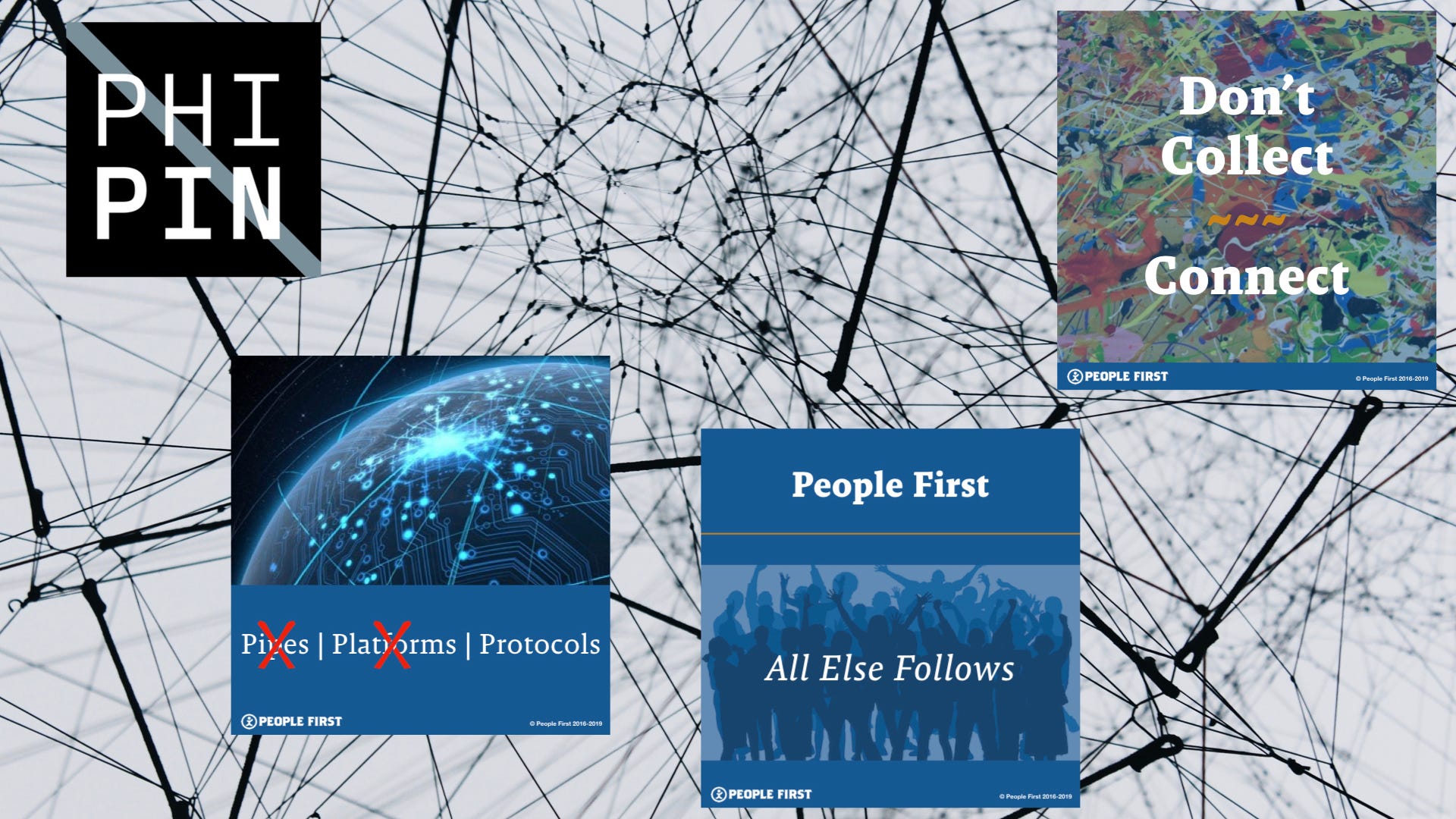
When I left People First ‘behind’ to start PHI⑊PIN3, it was only the name that changed. The foundation, the thinking, the frameworks all remained and are in constant use and now we build solutions on those principles. Not with a new tech stack. No reinvention of the wheel. Definitely not throwing away what works and absolutely building value through a three step process.
Think carefully.
Build what’s needed now.
Stay agile for the future.
Websites appear as outcomes not as the project. Solutions emerge from solving real problems, not from feature roadmaps. We move fast, faster than most. But every piece serves a purpose. Nothing exists for its own sake.
And here’s the thing:
We make money when our customers grow, not when they’re stuck.
The sunset in the rear view is clear. Yesterday is over and tomorrow is a new day.
Will it be exactly the same as yesterday? No. So why are you doing the same thing?
Each of us has one history - and many possible futures.
Which future is all to do with the choices you make today.
Want to talk more?
Joyce Searls (yes - that Joyce) posed this question years ago in the early days of Vendor Relationship Management (VRM) thinking. It remains the most elegant articulation of the asymmetry we’re working to address.
Credit to John Caswell for this formulation. It captures something I’ve observed across two decades of watching software companies excel at doing just that.
I should write a newsletter one day explaining ‘why’ PHI⑊PIN.