
Not yet subscribed? There’s a button for that.


And then it happened
Ooh, and then it happened
Ooh, and then it happened
Ooh, and then it happened💬 Holland Dozier and Holland (‘H-D-H’ to their friends.)

If you have been following along (and if not - why not?) since the early days of People First, my work in Structured Thought and more recently, the consolidation into PHI⑊PIN then this is for you.
If you haven’t - it is - maybe even more so - still - for you.
Finally. It happened. Sometimes you think that you might just be ‘🔗🎵 blowing in the wind’ - until one day it changes and you think ‘maybe not’.
Today is one such day - because whilst spinning through this morning’s ‘thought review’ - 6 articles caught my eye1 that all connected. With each other, with me and with Structured Thought.
Six Voices. One Message.
Paolo Valdemarin | Laid out the job of what I call an ‘Engagement Platform’ by externalising your operating model so AI can translate between contexts while maintaining a single understanding.
Ben Thompson | Microsoft chose ‘coherence over scale’ by prioritising its own product suite. Why? Because maintaining a coherent vision across a portfolio matters more than maximising any single dimension.
Joan Westenberg | Solo operators using Structured Thought beat out large organisations because coherence compounds while incoherence fragments.
Christopher Lochhead | Execution is automated, knowledge is commoditised and real value has moved ‘upstream’ to problem framing. Which is exactly the point of ‘avoiding solving the wrong problem really well’ as my friend John Caswell has it and indeed, provides a ‘why’ of Structured Thought.
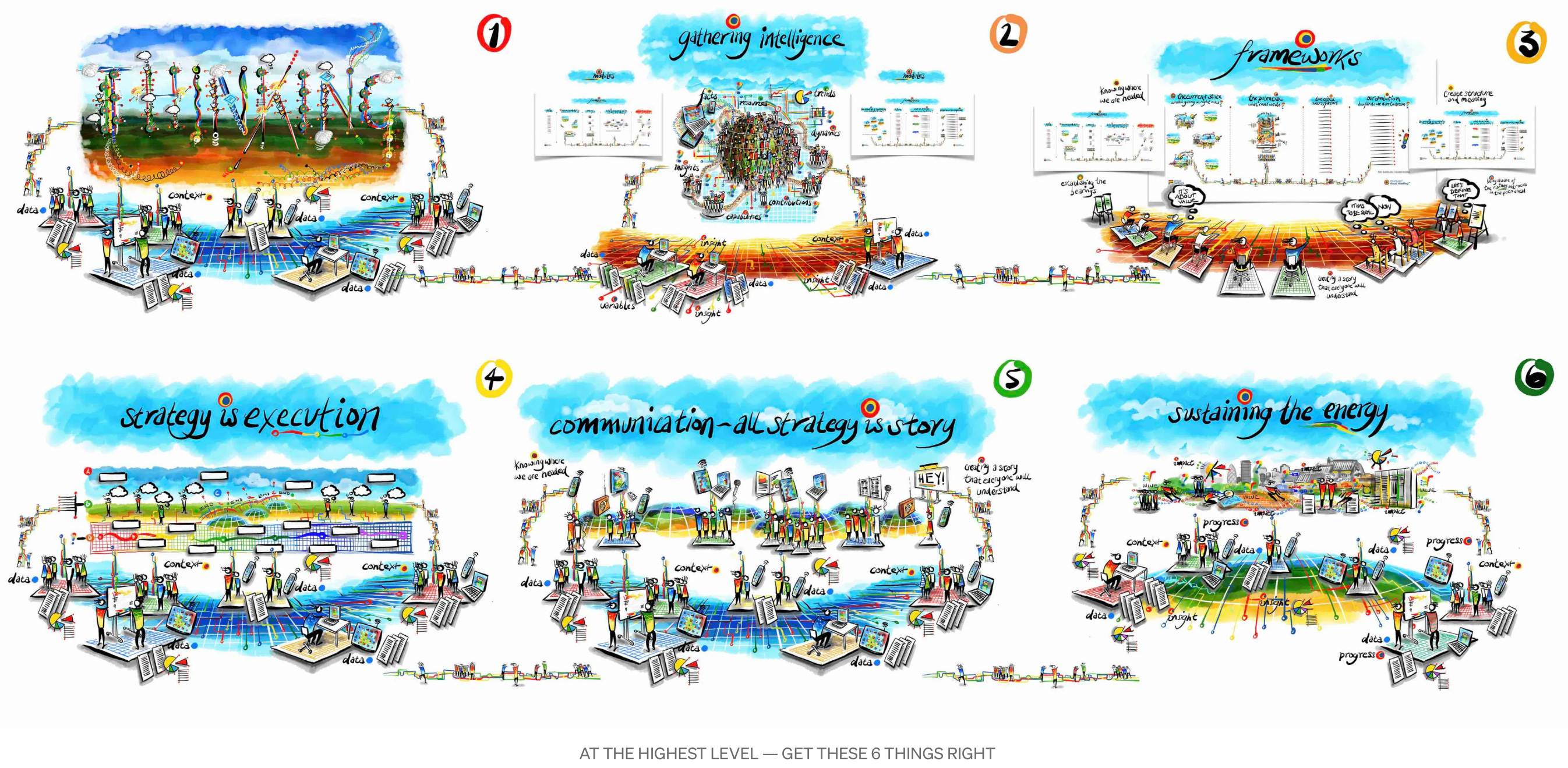
Geoffrey Moore | Agentic AI needs to be deployed atop proven, reliable structures with guardrails built in, not improvised on the fly.
Om Malik | The ‘announcement economy’ is a world of velocity and noise. Coherence matters precisely because everything else is optimised for attention rather than truth. I called it the ‘noise economy’ when I wrote about this last September in a piece called ‘Sound of Silence’.
The Convergence
You might think that these are isolated observations. They are not. Nor are they unique (other than they all appeared in my feed this morning). Bottom line - they are all describing the same shift. A shift that is unspoken - but at the heart of Structured Thought.
Competitive advantage is no longer scale, speed, or even access to AI. It’s coherence - the degree to which every decision, every output, every interaction derives from the same underlying model of reality.
In large organisations, this is nearly impossible. Different departments operate from different mental models and information fragments at every handoff. AI amplifies the disagreement rather than resolving it. But a small team with explicit structure working with a clear operating model, documented constraints, decision rationale, voice guidelines can scale without fragmenting and AI becomes a tool for executing within that coherence, not a way to hope disparate teams accidentally align. This is what structured thought actually means in practice: externalising your logic so thoroughly that it can guide people, process and systems.
Paolo Valdemarin: 🔗 AI as a communication tool
Ben Thompson: 🔗 Microsoft and Software Survival
Joan Westenberg : 🔗 The Coherence Premium
Om Malik : 🔗 The Announcement Economy
Chris Lockhead: 🔗 The Value of Your Value (LinkedIN)
Geoffrey Moore : 🔗 When will Agentic AI Cross The Chasm (LinkedIN)
John, this resonates deeply. In a world optimized for speed and noise, coherence becomes the differentiator because it aligns thinking, decisions, and execution around a shared reality rather than chasing attention or scale.
Spot on. Coherence is indeed the new moat.
And coherence is a practice. It has a surprising requirement - it demands analogue. I’m finding irony everywhere. Digital promises coherence (through integration/synchronisation - blah). And yet organisations are drowning in connected systems have never been less coherent.
Why? Because digital makes it too easy to skip the hard part - the thinking before the execution.
When everything flows frictionlessly into shared drives we easily mistake activity for alignment. Having one source of shared information isn't the same as a shared or specifically useful understanding.
Analogue is the only antidote because it won't let you skip steps.
I would say this wouldn’t I.
Stand in front of a massive wall with a marker in your hand and you cannot hide what doesn’t make sense to us humans. You cannot copy-paste or prompt your way to learning or insight. The gaps and contradictions become visible to everyone at once. The understanding is multi dimensional and massively contextual. (Real)
In my language we are literally drawing conclusions.
This is what coherence actually costs - the productive friction of making the thinking explicit before we operationalise it.
You cannot give AI a mental model you haven't articulated. And articulation, real articulation, still happens best when humans slow down, stand up, and draw that blueprint.
Our world is optimised for velocity. Humans, deep down are hankering for stillness. We are currently drowning in digital but the edge is analogue. And it’s not instead of. Before.